


SWALLOWING DIFFICULTIES:
EOSINOPHILIC ESOPHAGITIS?
SWALLOWING DIFFICULTIES:
EOSINOPHILIC ESOPHAGITIS?
SWALLOWING
DIFFICULTIES:
EOSINOPHILIC
ESOPHAGITIS?
WHAT IS EOSINOPHILIC ESOPHAGITIS?
Eosinophilic esophagitis (EoE) is a rare chronic inflammatory condition affecting the oesophagus (also known as the gullet or food pipe) whose origins and causes are not yet fully understood. This inflammation (as denoted by ‘…itis’) is characterised by the presence of a certain type of white blood cell in the lining of the oesophagus, the mucosa. These cells are called eosinophils and give the disease its name.
A short summary of EoE
– Difficulty swallowing; including food getting stuck in the oesophagus (bolus obstruction)
– Pain when swallowing (primarily solid foods)
– Avoidance strategies: eating very slowly, pureeing food in a blender, avoiding eating in restaurants, drinking a lot with meals
– The causes are thought to involve a number of factors that probably include food allergens
EoE is also a ‘young disease’ because it was only recognised as a disease in its own right in 1993, and the medical establishment only started to pay more attention to the condition in the 2000s.
The oesophagus of an adult is about 25 cm (10”) long and has a diameter of about 2.5 cm (1”). It connects the mouth to the stomach and transports food. That means that the lining of the oesophagus comes into contact with everything we eat and drink.
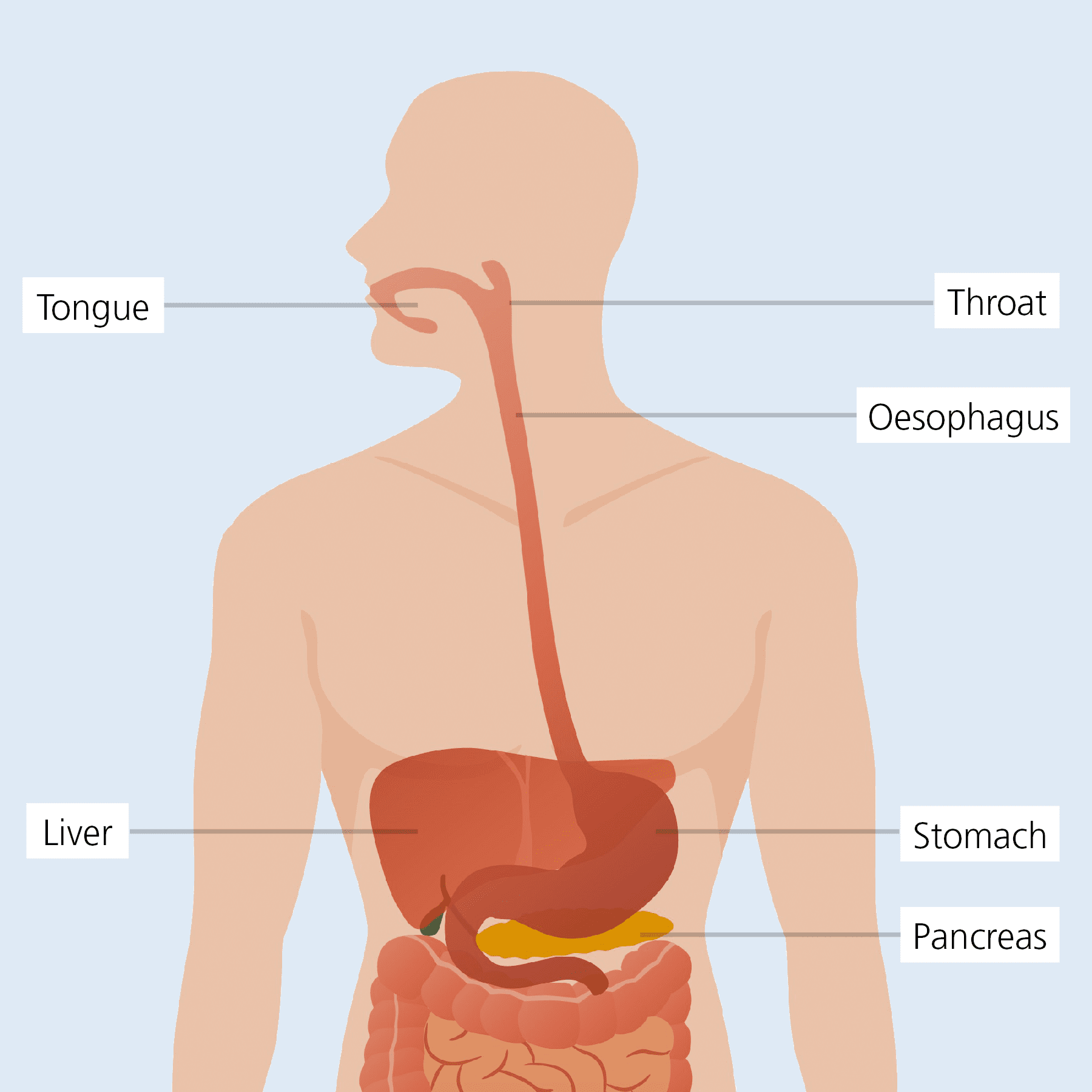
The oesophagus connects the mouth with the stomach
In EoE patients, certain food components (allergens) are suspected of triggering inflammation in the oesophagus. This inflammatory response has similarities to the one that occurs in asthma, which is a chronic inflammatory condition of the respiratory tract and caused by airborne allergens. Therefore, EoE is often referred to as ‘asthma of the oesophagus’. As in the case of asthma, airborne allergens may also trigger EoE. Patients with the disease often also suffer from other allergic conditions, such as hay fever, asthma, rash and food allergies in general. The connection between EoE and these disorders is still unclear. And with the exact cause(s) of EoE still not being fully understood, this is the focus of current research.
The causes of EoE are thought to involve a number of factors, including a chronic inflammatory reaction to certain food and airborne allergens. Common triggers are cow’s milk (≥ 50%), wheat (≥ 50%), soya, eggs, nuts, fish and seafood.
How common is EoE?
EoE is a rare disorder that was first recognised as a disease in 1993. Today, EoE is known to be the second most common inflammatory condition of the oesophagus after gastro-oesophageal reflux disease (GERD).
In Europe, around 16 people in 100,000 will develop the condition, but there can also be some regional differences. Males are at a significantly higher risk, both in childhood and as adults. EoE can occur at any age, but starts most commonly between the ages of 30 and 50.